

Cannabis Education & Insights
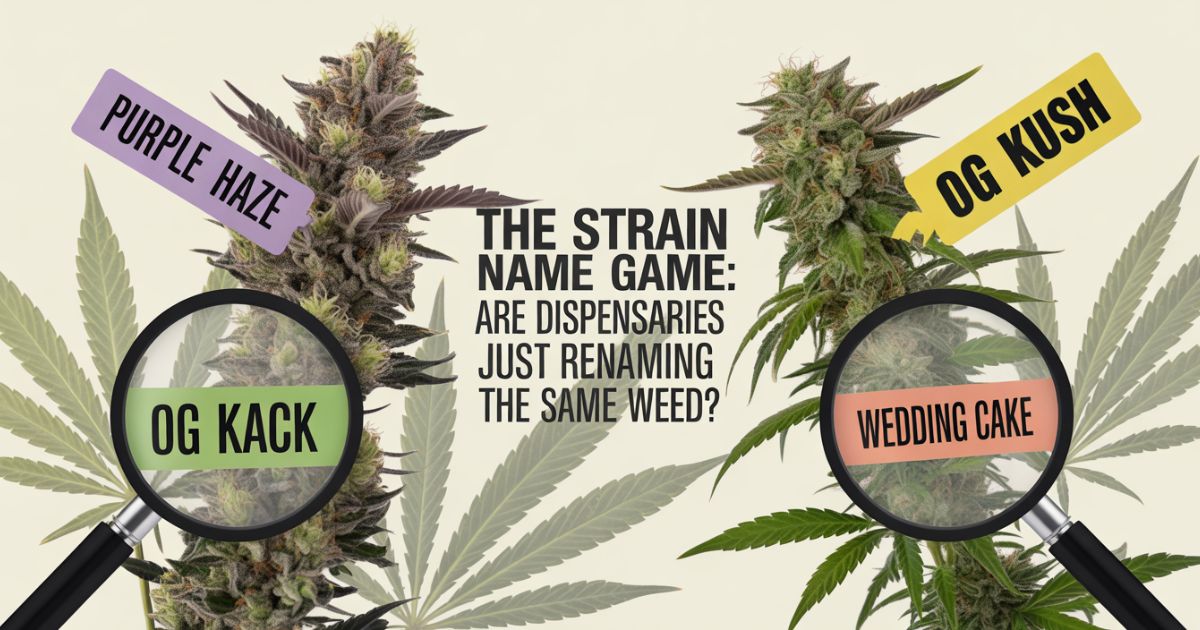
The Strain Name Game: Are Dispensaries Just Renaming the Same Weed?
22
Oct
Oct
Ever noticed how one dispensary sells “Pineapple Dream” while another lists “Tropical Haze” — yet they look, smell, and even feel identical? You’re not imagining it. The growing issue of Cannabis Strain Renaming has quietly become one of the most confusing trends in the Canadian weed market.
As cannabis becomes more commercial, dispensaries and growers sometimes tweak names to stand out — or, let’s be honest, to resell the same strain under a new label. If you’ve ever wondered whether “Gelato Punch” and “Purple Cream Gelato” are secretly siblings, you’re in the right place.
Let’s dive into the world of Cannabis Strain Renaming — where branding, genetics, and a bit of marketing magic collide.
Why Cannabis Strain Renaming Happens
1. Branding Over Botany
The cannabis industry runs on perception. Renaming strains gives dispensaries a way to make old genetics feel fresh again.
If one store calls a strain “Northern Frost” and another calls it “White Glacier,” both may actually come from the same genetic lineage. But a unique name can drive curiosity — and sales.
2. Market Competition
With thousands of strains and limited shelf space, retailers compete fiercely. Same strain, different name becomes a marketing shortcut — appealing to both newbies and casual users who might not notice.
3. Avoiding Licensing Issues
Sometimes it’s not deception — it’s legality. Certain strain names (like “Girl Scout Cookies” or “Gorilla Glue”) are trademarked, forcing dispensaries to rename them. So “Cookie Gelato” or “GG4” are simply workarounds.
4. Regional Rebranding
Even within Canada, different provinces use unique names for identical genetics. What’s sold as “BC Kush” in British Columbia might appear as “Mountain Mist” in Ontario.
The Science Behind Strain Identity
Every cannabis strain is defined by its genetic profile — primarily the mix of cannabinoids (THC, CBD, etc.) and terpenes (the aroma compounds).
In theory, these make each strain distinct. But in practice, Cannabis Strain Renaming creates overlap: the same genetics marketed under multiple identities.
A lab test could confirm the truth — two “different” strains with identical terpene and THC levels are likely the same product in disguise.
Signs You’re Seeing Cannabis Strain Renaming
Here are a few clues that your favorite “new drop” might not be so new:
- Identical THC/CBD percentages as an older strain from the same supplier.
- Same terpene profile (citrus, pine, diesel) across different names.
- Similar bud structure and aroma despite new packaging.
- Identical pricing tier — often the renamed strain is in the same price range as its predecessor.
If it walks, talks, and smells like the same strain… it probably is.
Online Dispensary Tricks: How It Works
Online retailers sometimes use subtle tactics that play into Cannabis Strain Renaming:
- Repackaging bulk flower with new labels to refresh old inventory.
- Limited-time exclusives that are, in reality, rebranded versions of existing stock.
- “New” strain drops that coincide with supplier overstock periods.
It’s not always malicious — but it is confusing for consumers trying to track what they’re actually smoking.
That’s why transparency matters. Trusted dispensaries like KushBuddy.co provide strain lineage, lab results, and terpene breakdowns, helping you verify the genetics behind each product.
How to Identify Duplicate Strains
Compare Lab Reports
Look for the terpene profile and cannabinoid content. If two “different” strains have nearly identical results, you’ve found a renamed duplicate.
Trust Your Nose
Smell is a great indicator. Terpenes are like a strain’s fingerprint — no two combinations are identical unless they share genetics.
Read the Packaging
Some online dispensaries use vague strain origins like “Indica Hybrid.” Authentic brands list the breeder and genetic lineage.
Learn Common Rebrands
Certain classics have dozens of aliases:
- “Girl Scout Cookies” → GSC, Platinum Cookies, Forum Cut Cookies
- “Gorilla Glue” → GG4, Original Glue, Sticky Glue
- “Blue Dream” → Sky Dream, West Coast Dream
Knowing these helps you avoid confusion (and marketing gimmicks).
The Impact on Consumers
1. Confusion and Trust Erosion
When buyers discover that “brand-new” strains are actually renamed versions of older ones, trust drops fast. The excitement of trying something “exclusive” fades into skepticism.
2. Quality Inconsistency
Cannabis Strain Renaming sometimes hides quality issues. A lower-grade harvest might get a fresh name and flashy label to move inventory.
3. Harder Product Comparisons
For serious users tracking what works best for them (sleep, anxiety, focus), renaming disrupts that process. It’s hard to refine your preferences when names keep shifting.
How to Protect Yourself as a Buyer
- Stick with reputable dispensaries — like KushBuddy’s Shop — that publish test results and genetic details.
- Use third-party resources like Leafly to check lineage and reviews.
- Keep a strain journal — note effects, aroma, and brand details to spot patterns.
- Avoid hype-based marketing — terms like “rare,” “limited batch,” or “exclusive drop” often signal rebranding.
Knowledge is your best filter.
Key Takeaways
- Cannabis Strain Renaming is common — often for branding or legal reasons.
- Many dispensaries sell genetically identical strains under new names.
- Checking lab results and terpene profiles helps identify duplicates.
- Trusted sources like KushBuddy provide transparency and verified genetics.
- Awareness saves you from paying premium prices for repackaged weed.
Conclusion
So, are dispensaries just renaming the same weed? Sometimes — yes. But not always out of deceit.
Cannabis Strain Renaming reflects how the market evolves: fast, competitive, and branding-driven. Still, educated buyers can see through the noise.
Next time you’re shopping online, pay attention to the small details — percentages, aromas, lineage — and you’ll spot patterns others miss.
👉 Shop verified, lab-tested cannabis at KushBuddy.co — where transparency meets quality, and what’s on the label is truly what’s inside.